- Value Creation Progress and Vision
- Value Creation Strategy
- Medium- to Long-Term
Growth Strategy - Development Strategy
- Sustainability
- Corporate
Governance - Financial Analysis
and Corporate Data
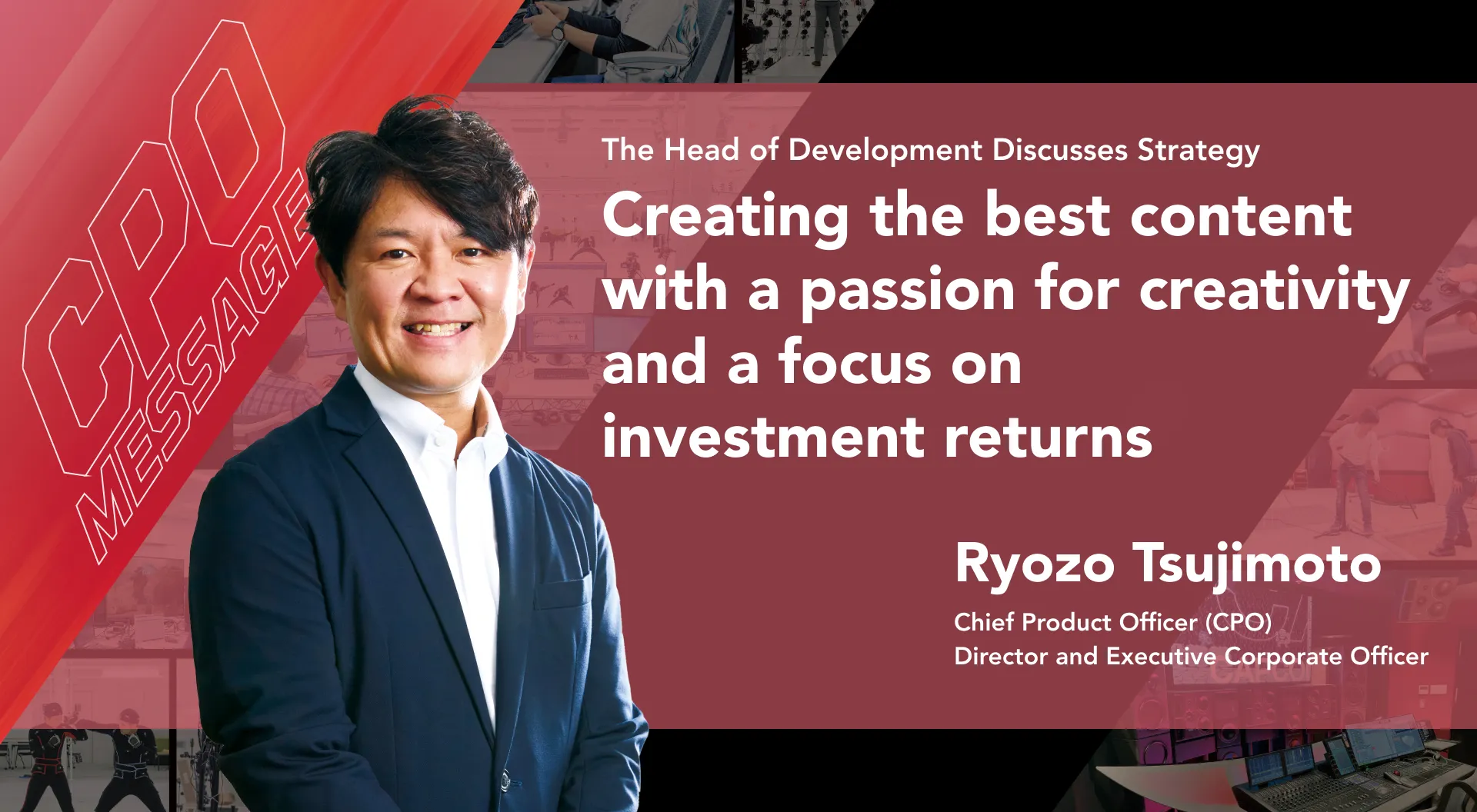
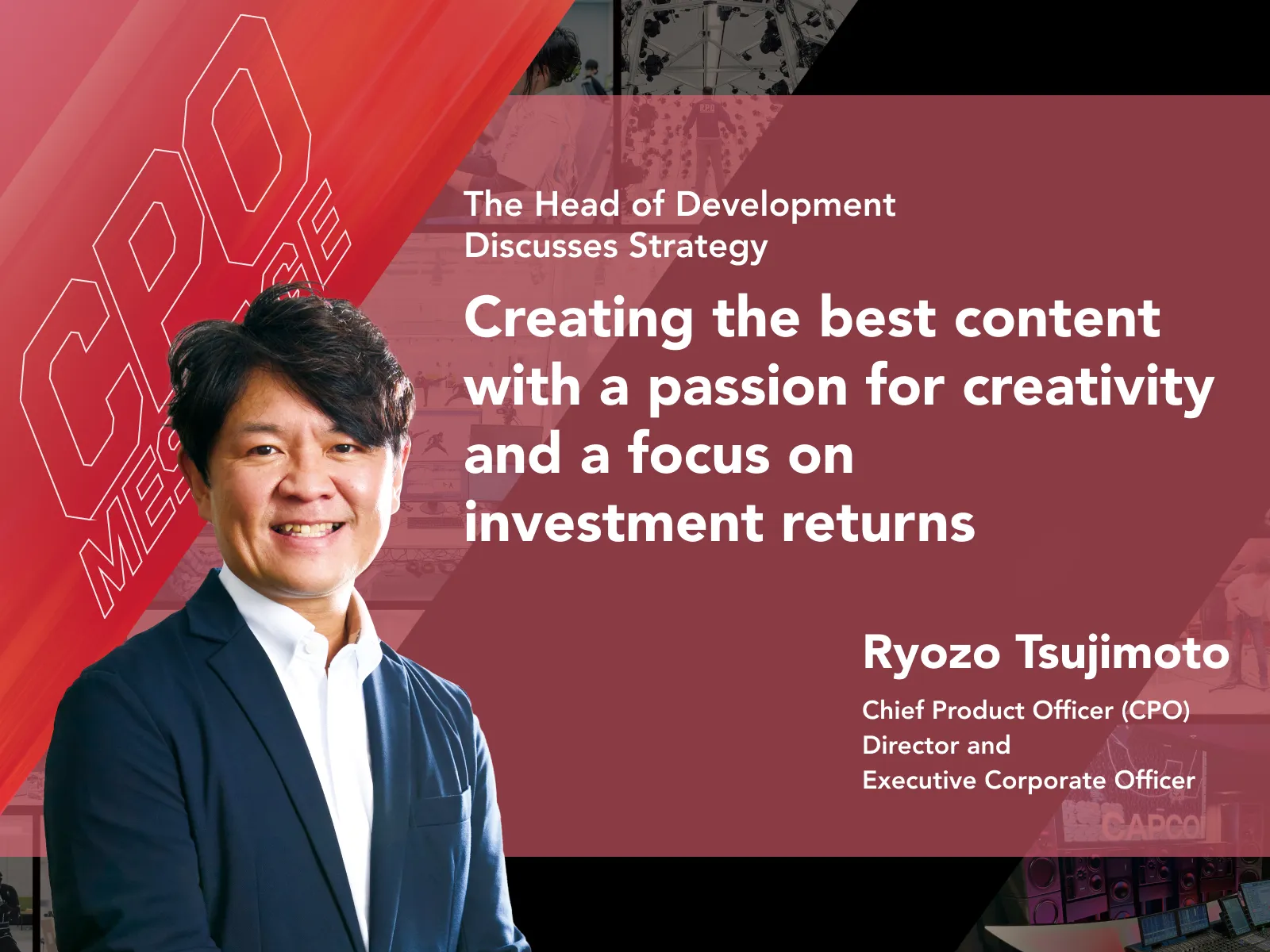
My appointment as CPO
Since joining Capcom in 1996, I have consistently worked in our development divisions, experiencing the evolution of game development at the forefront. In recent years, as the Head of Consumer Games Development Division 2, I led various brands, including the Monster Hunter series.
I was appointed as CPO to lead development and intend to carry on where my predecessor left off, adopting the same development style rooted in a passion for the craft and a commitment to quality, structuring our development system to produce titles consistently over the long term, and managing investment returns based on ROI. At the same time, I will utilize my own experience as a game producer to instill a business perspective among core developers, create content that better values the user experience, and strengthen collaboration between business divisions.
General approach
The strengths of Capcom’s game development are found in: (1) our unwavering commitment to creativity, (2) the technical prowess to bring our concepts to life, (3) our more than 2,800 development team members who have these two values ingrained in their DNA, (4) our robust structure, in which the game development divisions and the support divisions bolster each other, and (5) the abundant IP that we have created over the past 40 years, including hits such as Monster Hunter and Resident Evil.
To continue to meet the high expectations of users around the world and earn the trust of stakeholders, I recognize that we must maximize our strengths, refine them to keep up with evolution and scale, and lay the groundwork for the future.
Demonstrating our strengths
Capcom’s development has traditionally been based on in-house production, and our development capabilities are among the best in the world. As global game development continues to evolve at an even faster pace, I believe that absorbing changes through in-house production is the best way to maintain and improve our competitiveness. At the same time, reinforcing the cooperation and relationships we have with partner companies is also essential in addressing the wide-ranging challenges that accompany development.
Consumer Games Development Division 1 and 2, which are in charge of title development, are demonstrating their individuality in the titles they each oversee. Aiming for medium-to long-term growth and maximizing profits, we have formulated a title portfolio called the Medium-Term Development Map that looks five to ten years into the future.
By visualizing the release timing and earnings contribution of each title, we aim to optimize annual earnings and sales intervals within a brand, as well as avoid the over-concentration of title releases. Furthermore, the map also plans the creation of new IP and the revival of dormant IP. In operation, the R&D Management Division supports cost management and management discussions based on plans from the divisions carrying out title development, establishing a system for deployment in management and operations.
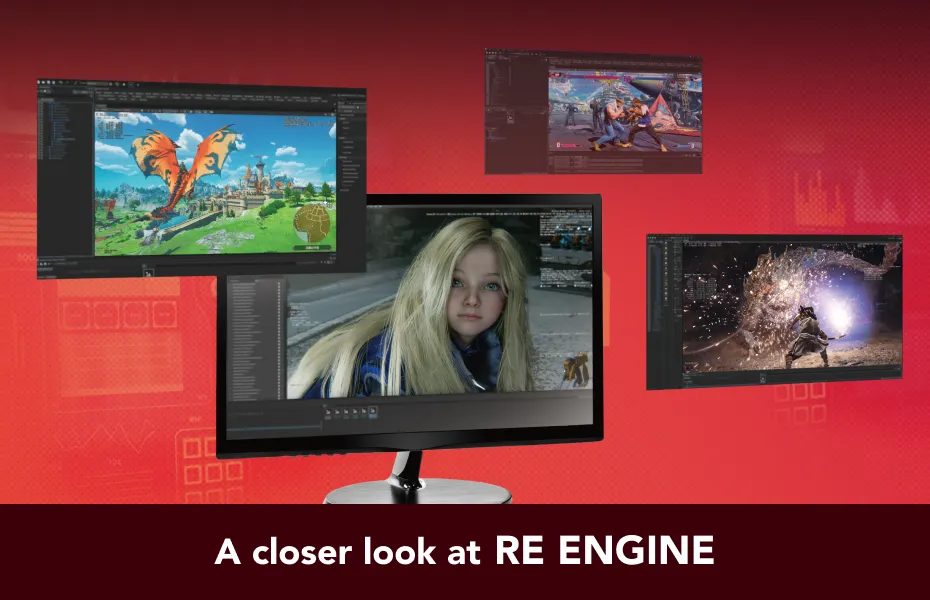
The technical standards and efficiency of our development is supported by our proprietary, in-house development engine, RE ENGINE. In addition to its technological and efficiency advantages, this unified development environment offers benefits such as technology sharing across titles and flexible allocation of personnel. RE ENGINE is overseen by the Technical Research Division, which is responsible for the research and operation of fundamental technologies, and is also involved in preparations for the next evolutionary stage and testing of Al technology.
Another distinctive feature of our development is the extensive and well-established support system within our support divisions. This includes the Quality Control Division, which provides comprehensive support for quality control through bug fixes and game balance tuning, and the Consumer Games Production Division, which is responsible for services such as localization along with sound and visual production. This system allows us to maximize the performance of our large-scale development team.
Refining approaches to suit today’s reality
As the scale of development expands, rigorous cost management is essential. In our Medium-Term Development Map, we improve operational accuracy by first calculating development investment for each title, then the appropriate P/L and ROI based on that scale. To respond to fluctuations in market conditions and individual title factors, we update the map on a rolling basis every six months while continually refining our calculation methods and tools.
Each title is presented at the development and production meeting at each of the following stages: (1) initiation, (2) prototyping, and (3) production. Development progresses after careful scrutiny from both quality and profitability perspectives. In recent years, with the increasing sophistication of sales data analysis, development divisions are increasingly being asked to flexibly add languages and platforms, both before and after release. We are working to enable development executives to make quick decisions and ensure frontline response.
With the spread of digital sales, the lifetime of titles is becoming longer, making it extremely important to continuously maintain and improve user satisfaction. We are, therefore, proactively providing post-launch updates while carrying out two-way communication with our fans. Similarly, it is becoming increasingly important to provide a high-quality experience equally to users in all regions around the world, on platforms with diverse performance and configurations, including PCs.
In order to meet a wide range of needs, we will listen more carefully than ever to user feedback and strive for continuous improvement by collaborating not just within the development divisions, but throughout the company as a whole.
Laying the groundwork for the future
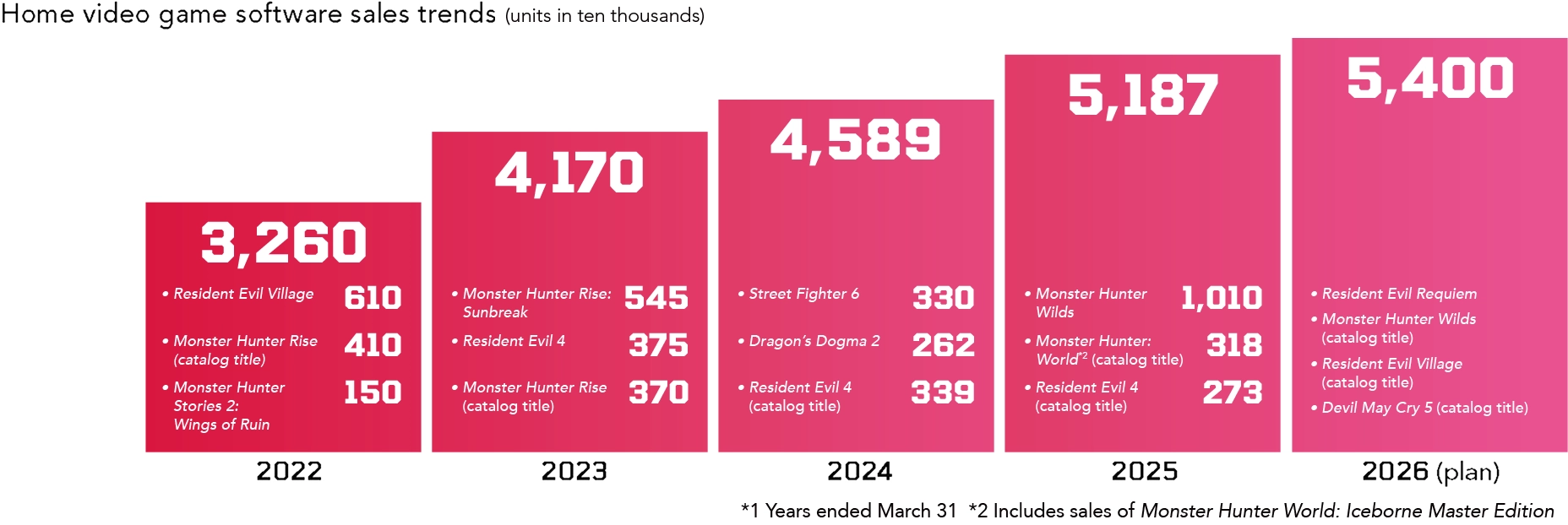
To achieve annual sales of 100 million units, we must accelerate our global expansion and strengthen our pipeline by increasing the number of new titles. The foundation for this is, of course, our people. Since 2013, we have actively hired more than 100 developers each year, and through their practical experience, this diverse talent from around the world enriches the foundation of our game development. In 2024, we established the CAPCOM-SHIP development personnel policy to further instill the values and standards of behavior we strive for in our development teams. To enable the early development of young talent even as production timelines grow longer, we will update our training programs, while continuing to promote improvements such as with compensation and our various personnel systems, striving to enhance our work environment to link worker motivation and ambition to results.
In closing
As CPO and the person in charge of the Development Divisions, my role is to lead and manage our development teams with a five- to ten-year outlook. It is an area filled with uncertainty and challenges, but that is the very essence of the ever-evolving game industry. My mission is to take a long-term perspective and implement appropriate measures to translate actions into achievable targets for our frontline operations. Guided by Capcom’s DNA of always striving for the best, I will work in step with our employees, who all share our common aim, and utilize our world-class technical prowess and unique, highly refined operational system to develop games that captivate people around the world.