Environment
(*Edited from Integrated Report 2025)
Environmental Initiatives as an Entertainment Company
Capcom’s Digital Contents business accounts for approximately 75% of the Group’s consolidated net sales and primarily entails the development and sale of software. Because we recognize that the environmental impact and climate-related risks are lower than those of general manufacturing, we have determined that the impact of risks and opportunities related to climate change on Capcom’s business activities and revenue is minor.
However, we view addressing climate change as a challenge that requires the cooperation of everyone living on this planet. At our Group, we have continuously worked to reduce our environmental impact by promoting digital sales of content and other such efforts. This is in-line with our management philosophy of creating an entertainment culture through the medium of games by developing highly creative content that excites and stimulates your senses.
We will continue actively working to solve issues common to society such as climate change while referring to indicators and frameworks such as the TCFD recommendations.
Governance and Risk Management in Relation to Climate Change
(1) The Corporate Management Council (chaired by the Chairman/Chief Executive Officer) deliberates on policies and measures to address risks and opportunities related to climate change.
(2) Based on the results of these deliberations, the relevant departments promote initiatives under the direction of the Representative Director or Director in charge and report the results to the Representative Director or the Corporate Management Council.
(3) The Board of Directors receives reports from and oversees the Representative Director or the Corporate Management Council on important matters related to climate change.
Reducing Environmental Impact
The Capcom Group is working to reduce CO2 emissions and optimize resource utilization through strategies that address the risks and opportunities outlined below. These include promoting digital sales, introducing renewable energy, and pursuing energy-saving and recycling measures.
Risks
- Increased business costs due to the introduction of carbon taxes
- Higher raw material, production, and procurement costs resulting from carbon regulations and restrictions on plastic use
- Disruption of business continuity caused by intensified extreme weather events from natural disasters and global warming, along with impacts on employees’ workstyles, health, and daily lives
Opportunities
- Reduced plastic use and lower transportation costs through the promotion of digital content sales
- Reduced carbon taxes through the use of renewable energy
- Lower procurement costs through recycling of certain amusement equipment parts
- Further acceleration of digitalization driven by changing consumer preferences
Metrics and Targets
Japan’s 2050 Carbon Neutral Declaration sets a goal of achieving a decarbonized society and net-zero greenhouse gas emissions by 2050.
The Capcom Group will continue to pursue medium- to long-term goals to reduce emissions across the entire Group as we move toward decarbonization. At the same time, we aim to achieve net-zero CO2 emissions by 2050 and contribute to the realization of a sustainable society.
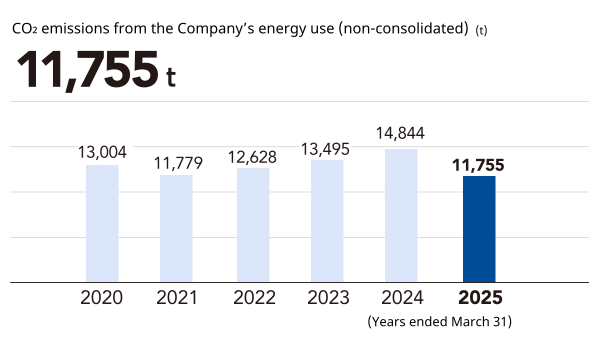
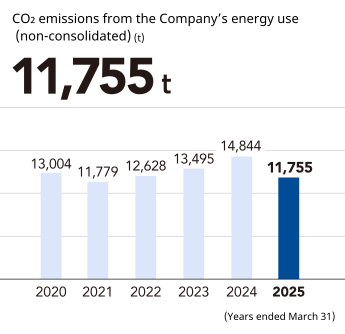
*Figures are based on adjusted greenhouse gas emissions reported in accordance with the Act on the Rational Use of Energy and Conversion to Non-fossil Energy (the Energy Conservation Act).
* From the fiscal year ending March 31, 2025, a zero-emission factor has been applied to electricity derived from renewable energy. The impact of this change in emission factors is a reduction of 4,455 t-CO2.
Utilizing Electricity Sourced from Renewable Energy
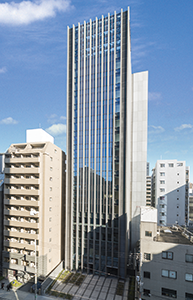
Promoting energy-saving measures,
such as switching to LED lighting at
each business site
The introduction of renewable energy that does not emit CO2 is seen as critical to achieving carbon neutrality. At the Company as well, we have introduced CO2-free electricity derived from renewable energy at our owned buildings in the Kansai region. This accounts for roughly 30% of the Company’s electricity usage in Japan.
In addition, we are expanding the use of CO2-free electricity, including the introduction of green power at our Tokyo branch and other business sites. Alongside measures such as utilizing our own data center with energy-saving features, we also rely on major cloud service providers and data center operators that promote the use of renewable energy, thereby further reducing our environmental impact. These initiatives reflect the Company’s responsible stance toward achieving a sustainable society, and we will continue to strive for ongoing improvement and development.
Towards Continuous Reduction in Energy Intensity
Despite the current increase in energy use due to the opening of new places of business and amusement facilities, our energy intensity has remained stable. Going forward, we will continue working to reduce our overall consumption by introducing energy-efficient game machines in our amusement facilities, improving air conditioning efficiency through repairs, and actively using renewable energy to increase our use of non-fossil energy sources.
| FY | Energy Intensity*1 | Vs. Previous FY |
|---|---|---|
| 2020 | 0.05583 | 95.1% |
| 2021 | 0.05186 | 92.9% |
| 2022 | 0.05497 | 106.0% |
| 2023 | 0.05803 | 105.6% |
| 2024 | 0.05259 | 103.7%*2 |
| 2025 | 0.0537 | 102.1% |
(Years ended March 31)
*1 Calculated using the method defined by the Agency for Natural Resources and Energy. The Agency for Natural Resources and Energy website:
https://www.enecho.meti.go.jp/en/
*2 The 2024 figures are calculated using a new formula due to revisions in relevant laws and regulations, while the year-on-year comparison is based on the figures prior to these revisions.
Reducing Scope 3 Emissions
As part of our efforts to reduce CO2 emissions, the Company has begun calculating Scope 3 emissions. Using data from the fiscal year ending March 31, 2025, we first identified and disclosed three major emission sources out of the 15 categories. Going forward, we plan to calculate the remaining related non-consolidated categories, and expand these to a consolidated basis. Through these initiatives, we will continue to strengthen overall visibility and disclosure of emissions, including Scope 3 in addition to Scope 1 and 2.
Capcom’s Scope 3 CO2 emissions in the year ended March 31, 2025 (non-consolidated)
| Item | Category | Emissions (t-CO2)* |
|---|---|---|
| Scope3 | Category 1 Purchased goods and services |
85,905 |
| Category 2 Capital goods |
16,313 | |
| Category 12 End-of-life treatment of sold goods |
2,240 | |
| Total | 104,458 |
* Emission intensity is based on the Emission Intensity Database (Ver. 3.5) published by the Ministry of the Environment.
*Scope 3 calculation method for CO2emissions
Category 1: Calculated by multiplying the emissions intensity with the purchased amount.
Category 2: Calculated by multiplying the emissions intensity with the capital investment amount.
Category 3: Calculated by multiplying the emissions intensity with the volume of sold products.
Reducing Environmental Impact Through Digital Sales
In the past, game software was packaged with printed instruction manuals. In recent years, however, these have been built into the software as digital data, reducing paper usage and saving the equivalent of approximately 51.87 million units annually. Furthermore, with the growing shift to digital downloads, resources such as discs, semiconductors, and cases are also being conserved. In the fiscal year ending March 31, 2025, digital sales reduced resources equivalent to approximately 46.72 million units.
With digital sales, there is no need to transport products from factories to stores or warehouses, allowing for a reduction in both costs and CO2 emissions. We will continue to promote digital sales of game software and work to conserve resources and reduce CO2 emissions associated with disc production and transportation.
Reducing the Environmental Impact of Pachislo Machines
We are also working to reduce environmental impact in the manufacture and sale of pachislo machines through initiatives such as energy-saving measures and partial recycling of parts. In solidarity with the efforts of the Japan Pachislo Machine Industry Association (Nichidenkyo), Capcom manufactures and sells pachislo machines partially made from recycled parts and equipped with standardized "green devices" aimed at controlling power usage.
Status of disposal of used arcade game machines
| Year | Amount recycled | Thermal recycling*1 |
|---|---|---|
| 2020*2 | 0.0% | 0.0% |
| 2021 | 99.8% | 0.0% |
| 2022 | 91.6% | 8.2% |
| 2023 | 75.8% | 24.0% |
| 2024 | 75.8% | 24.0% |
| 2025 | 74.1% | 25.7% |
(Years ended March 31)
*1 Volume used as heat source for hot water, heating, etc.
*2 Capcom switched to new cabinets in fiscal year ended March 2020, so there was no collection of used arcade game machines.