- Value Creation Progress and Vision
- Value Creation Strategy
- Medium- to Long-Term
Growth Strategy - Development Strategy
- Sustainability
- Corporate
Governance - Financial Analysis
and Corporate Data
Initiatives for sustainable growth incorporating an HR perspective
The Group was able to achieve steady growth in the fiscal year ended March 31, 2025, thanks to the understanding and support of users and other stakeholders. This achievement is also the result of the sincere efforts of our people working diligently every day to execute our business activities and the continued support of all of you. On behalf of Capcom, I would like to express our heartfelt gratitude.
Faced with dramatic changes in the business environment, Capcom has promoted strategies centered on securing and developing human resources, thereby elevating our organizational capabilities. At the same time, we have evolved our financial strategy to achieve sustainable growth and generate cash while continuing work to enhance the stability and flexibility of our business. With the accumulation of net cash, our options for future business reinvestment are expanding, making resource allocation that improves corporate value more important than ever.
We seek to unleash our potential from both a human resources and financial perspective, and will endeavor even more toward the creation of sustainable corporate value by reflecting in our management decisions the commitment to maximize the strengths of our organization. In the future, we will continue to be a company that meets and exceeds expectations by taking a positive approach to change and maintaining a flexible and ambitious approach to business development.
Our human resources investment strategy: Enhancing employee productivity and organizational strength
The importance of investing in our people
Continuously investing in talented human resources is critical in furthering Capcom’s sustainable growth. As the CEO correctly points out, to continue to develop high quality games toward our management target of a 10% or better increase in operating profit each fiscal year, as well as our medium- to long-term management goal of software sales of 100 million units, we need to secure excellent development personnel.
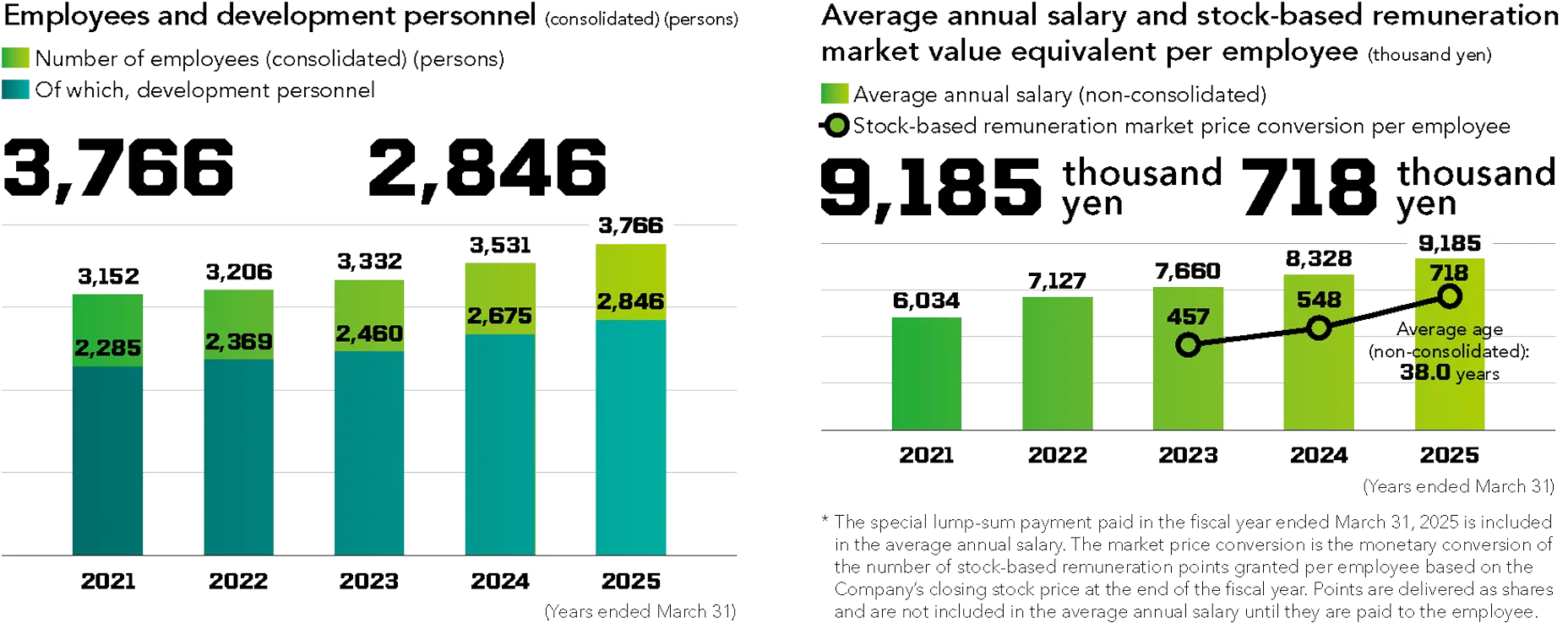
As of the fiscal year ended March 31, 2025, we employed 2,846 development personnel, which marks an increase of approximately 24.6% from the 2,285 personnel at the end of the fiscal year ended March 31, 2021.
Capcom’s operating environment
While our development headcount has been steadily increasing, we recognize that securing the necessary talent remains an issue both inside and outside the company. Internally, as platforms evolve, game development is expanding in scale with each passing year, and development lead times are growing longer. Creating world-class games requires cutting-edge technological capabilities, thus we must strengthen our organization to stay ahead of technological advances. As a result, we believe that further expanding our development headcount and improving the skills of our employees will be all the more important in the future.
Many of our employees hired between 1993 and 1995 are now in their mid-50s and are working at the forefront of game development. Thus, another important issue for the future is smoothly passing on the knowledge and skills that they have accumulated to the next generation.
On the other hand, looking at the external environment, Japan’s labor force is shrinking due to its declining birthrate, and competition in the recruitment market is heating up. There are many people in the younger generation who have been familiar with games since childhood, and we plan to actively recruit them in the future. Yet, the hurdles to attracting talented students who meet the standards required for our game development are getting higher every year.
Previous initiatives and outcomes
To address these issues, we have been implementing a human resources investment strategy that focuses on two points: namely, securing and developing human resources to support the future as well as revamping the work environment so that employees can maximize their abilities.
Securing and developing human resources to support the future
As touched upon in last year’s integrated report, we reviewed and made three changes to our remuneration system: (1) an average increase in remuneration for full-time employees of the Company of 30%, (2) the introduction of a bonus system linked to profits, and (3) the introduction of a stock-based compensation system for employees. These systems have created a virtuous cycle in which employees’ efforts are directly linked to improved business performance and stock price, which are then reflected in their own compensation.
As a result, the average annual salary of employees (non-consolidated) was 9,185 thousand yen in the fiscal year ended March 31, 2025, an increase of 52.2% from 6,034 thousand yen in the fiscal year ended March 31, 2021. In terms of the stock-based compensation, too, the exchange value of shares granted has increased as the stock price rises, which has boosted employee motivation to grow the company.
In addition to strengthening our competitiveness in terms of compensation, we are also promoting recruitment branding and diversifying our recruitment channels, including accepting interns from prestigious overseas universities. We have made steady progress in mid-career recruitment, and the number of mid-career hires at Capcom has grown to approximately 120 people. In terms of new graduate recruitment, in order to acquire even more talent, we intend to raise the starting salary of new graduates to 300 thousand yen per month from 2025, which is one of the highest in the domestic industry.
In terms of human resource development, we have been hiring more than 100 new graduates every year since 2013, and training them has been a major challenge. In response to this, our frontline operations are taking the lead in training and development, with initiatives such as mentor training for the early development of young employees, which saw an aggregate total of 1,000 development employees participating. In addition, management is also working to create an environment where employees can think independently and grow, such as promoting self-led online learning. We will continue to focus on training young employees so that they can take advantage of their youthful sensibilities while absorbing the valuable know-how of creators currently working on the frontline. In the process, we hope that they can become the next pillars of our game development.
Furthermore, in addition to assessments that encourage early selection of young employees for generalist career-track positions, we are also working on training to improve the management skills of newly appointed managers, with the aim of strengthening the core management layer of talent.
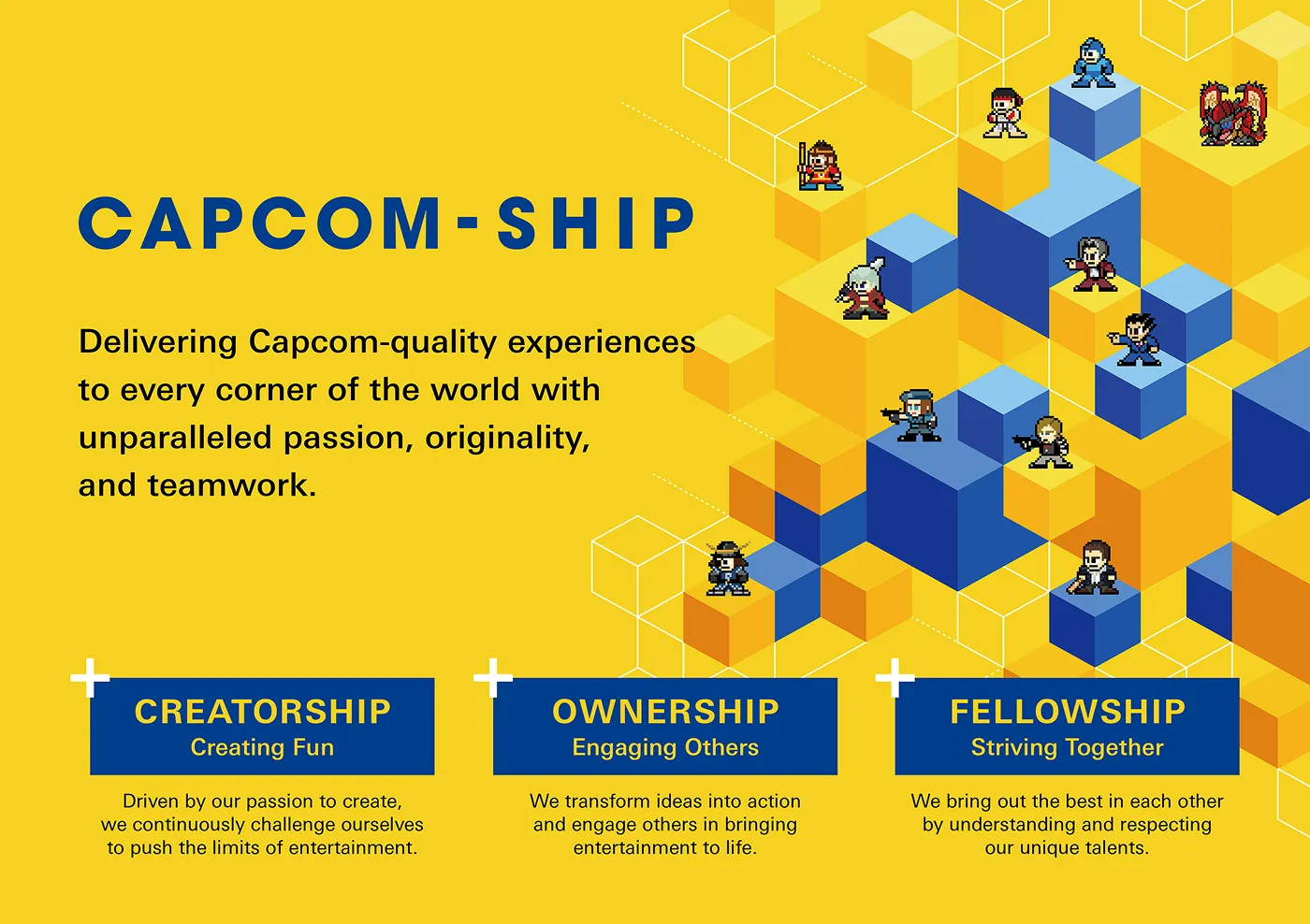
As we pursued these various measures in parallel, it became important to implement measures for development personnel, such as recruitment and training in a unified manner rather than separately. To this end, in 2024 we established and announced CAPCOM-SHIP, a development personnel policy that clearly states the values and standards of behavior that development employees should share.
 CAPCOM-SHIP development personnel policy
CAPCOM-SHIP was created through repeated discussions with employees from different generations and organizations. It sets out this common goal for all development staff: “Deliver Capcom-quality experiences to every corner of the world with unparalleled passion, originality, and teamwork.” To achieve this goal, we have established three standards of behavior: “Creatorship (Creating Fun)”, “Ownership (Engaging Others)”, and “Fellowship (Striving Together).”
We are currently in the early stages of introducing CAPCOM-SHIP as a guideline for organizational management and team building. While created primarily by members directly involved in game development, management also believes this is an important set of values. We will continue to carefully work to spread it throughout the company so that it will become firmly established as part of our culture.
Revamping the work environment so that employees can maximize their abilities
In further expanding the number of development personnel in the future, it is important to create an environment in which human resources with diverse backgrounds, i.e., foreign nationals and employees who need to work shorter hours due to childcare or nursing care obligations, can fully maximize their abilities. To this end, we are developing a number of systems tailored to individual circumstances. For example, we have introduced measures for foreign national employees such as a special leave system so they can visit their home countries, as well as Japanese language learning. We have also opened an in-house daycare center in the Osaka area, conducted nursing care seminars, introduced a partnership system that more inclusively recognizes partners/spouses, and rolled out paid menstrual leave.
In addition to providing harassment and line care training for managers, we have also begun addressing customer harassment, which has become a growing social concern in recent years. In this manner, we are promoting the creation of a workplace environment where employees can work with peace of mind. Furthermore, we are also working to reflect the voices of those at the forefront of our operations in our policies by conducting needs surveys for all employees and holding information sessions for employees led by management.
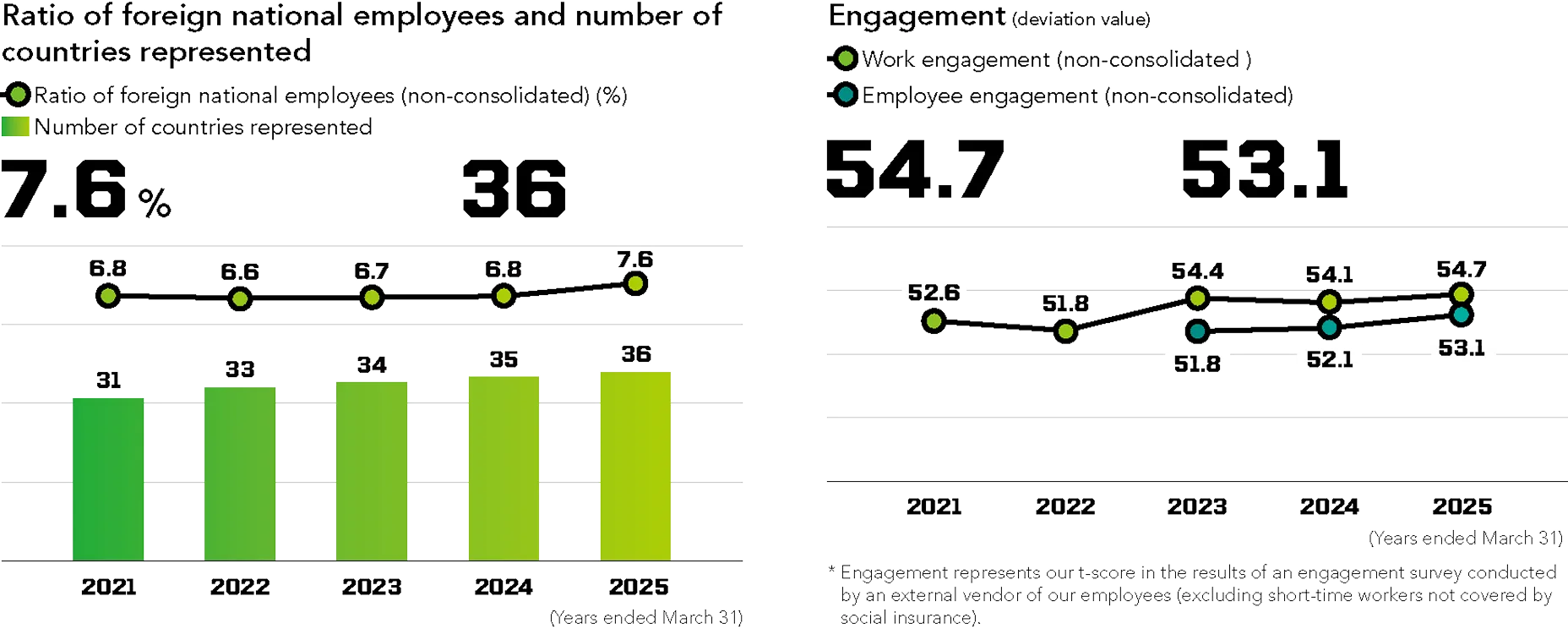
As a result of these measures, employee engagement has remained at a higher level, with a turnover rate that is less than the target of 3%.
Future challenges and initiatives
Securing further human resources is more important than ever for the Group’s sustainable growth. In recruiting new graduates, we intend to strengthen our ties with universities and vocational schools and promote human resource development through collaboration with educational institutions. One example is our collaboration with Kindai University, where we offer hands-on classes utilizing our proprietary game development engine, RE ENGINE. As part of our academic-industrial initiatives, we are hosting the Capcom Games Competition. This is a competition using RE ENGINE with the aim of quickly discovering and nurturing young creators capable of competing globally.
This competition not only allows participants to compete against each other, but also provides an opportunity for them to interact with our professional creators, thereby helping to improve their technical skills and creativity. Through these efforts, we hope to discover and develop the talent that will support our next generation of game development and further create opportunities for Capcom to meet talented people.
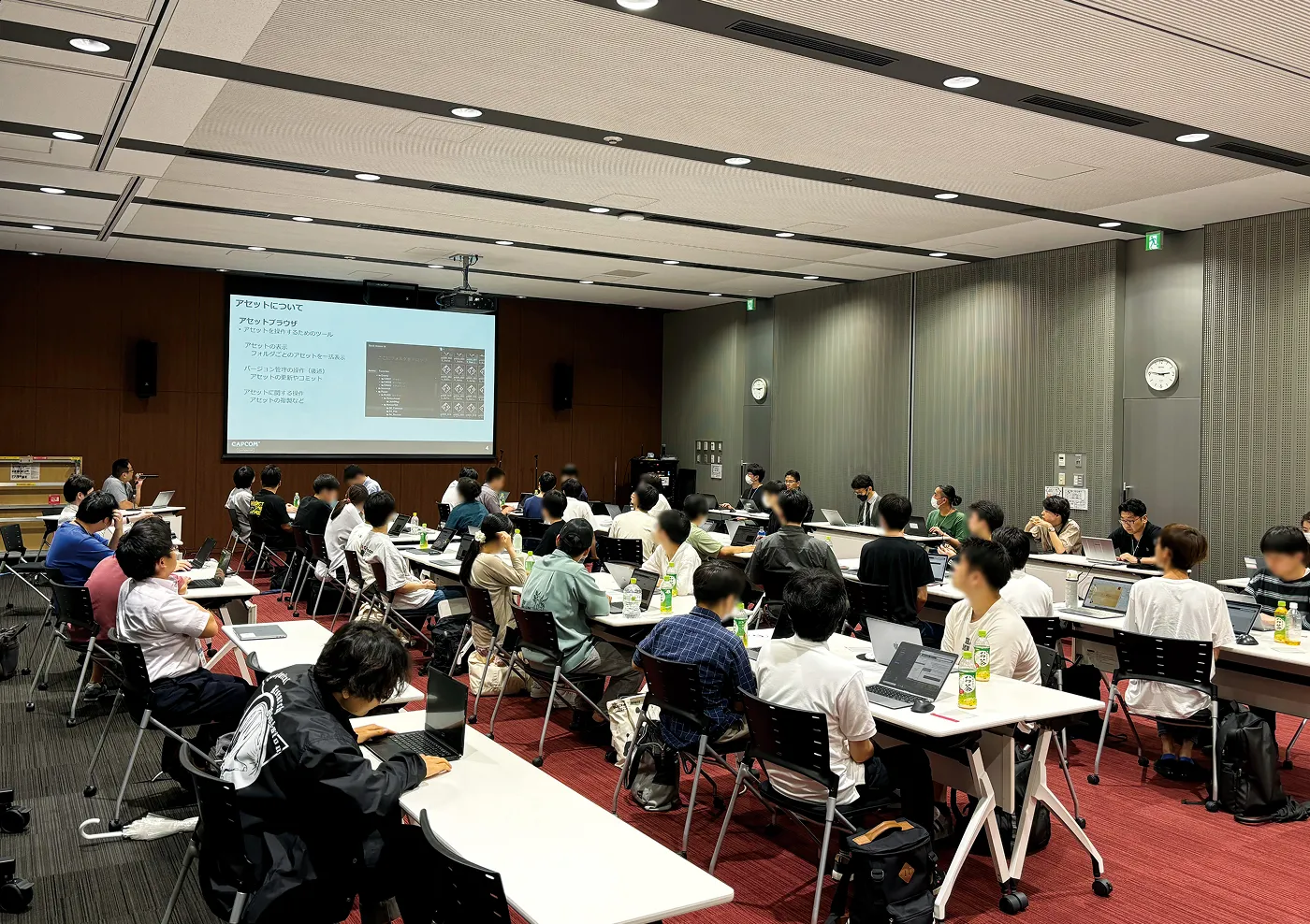 Hands-on class for students using RE ENGINE
We also recognize that further improvement is needed in creating an environment where people with diverse backgrounds can demonstrate their abilities, as mentioned above. We currently have more than 200 foreign national employees from 36 countries and regions, but there are still the issues of gaps in work styles and language barriers.
Although we have achieved results to some extent in terms of eliminating the wage gap between men and women and increasing the rate of male employees taking childcare leave, these areas require further initiatives with an eye on the future. We have set a goal of improving the gender wage gap to at least 88%, which is the OECD average, and to raise the percentage of male employees taking childcare leave to at least 85% by fiscal 2028, which is the government’s target for fiscal 2030. Furthermore, for older employees nearing retirement, whose numbers are expected to increase in the future, we will support them in taking stock of their careers and planning their life before and after retirement through training and other means. In the process, we will encourage them to pass on their knowledge and skills to younger employees. I believe that it is necessary to establish a support system to enable these senior employees to play an active role as valuable assets even when they are rehired after retirement.
Currently, by producing results through the human resources investment strategy described above, we are creating a virtuous cycle for greater diversity within the company and increased employee engagement. As CHO, I will accelerate this cycle by discussing the issues identified by each personnel organization at the management level and presenting policies.
Further investing in user expansion and sustainable growth
Expanding each business segment while evolving profits and capital
Improving financial condition over the past decade
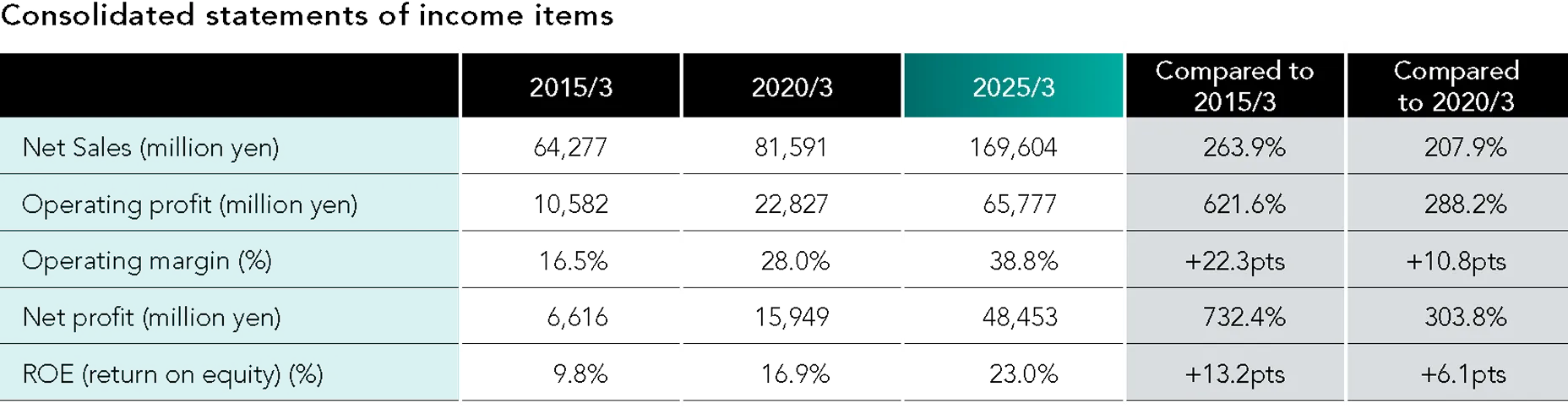
In the fiscal year ended March 31, 2025, operating profit for the Capcom Group increased for the 12th consecutive year, and we achieved record highs in all profit indicators for the eighth consecutive year. As shown in the following table of Consolidated statements of income item, over the past decade, operating profit has increased 6.2 times, net cash has increased 7.6 times, the operating margin has risen 22 points to 38.8%, and ROE for the most recent fiscal year was 23.0%, maintaining a level above 20% for the fifth consecutive year.
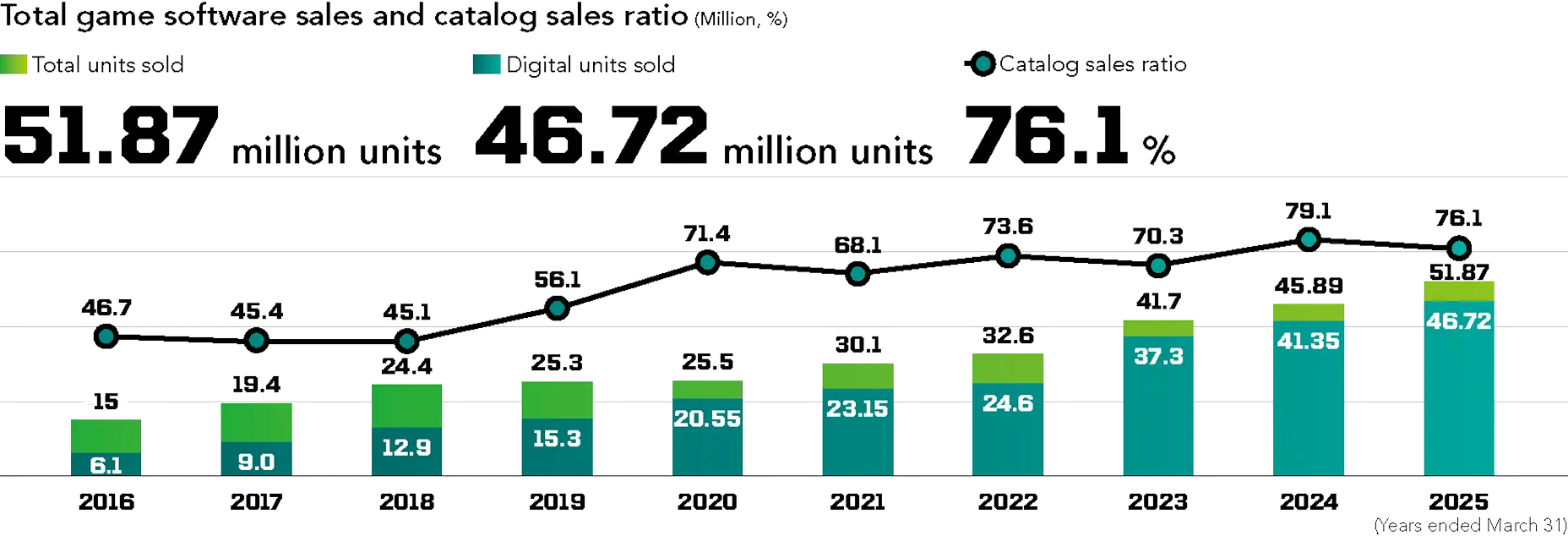
Factors behind this strong performance include Capcom’s expanded sales reach into new countries and regions driven by our shift to bolster digital sales, our ability to tap into long-term sales of previously released catalog titles, and optimally-timed pricing strategies that factor in the age of our titles, which contributed to increased sales volume.
Additionally, manufacturing and sales costs for physical products also declined significantly, and efforts to rein in increases in expense items (cost of sales plus SG&A expenses) were even more successful than sales growth, resulting in a lower cost of sales ratio and a significant improvement in the operating margin.
Furthermore, the Arcade Operations and Amusement Equipments businesses have overcome their respective challenges and transitioned to a phase of stable growth, contributing to continued profitability and cash generation.
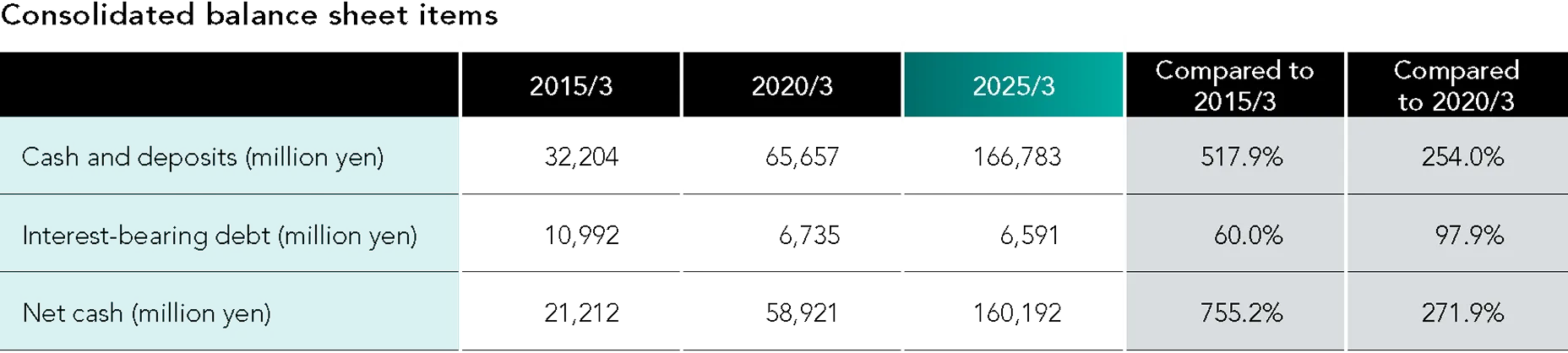
Net cash position
In recent years, Capcom has reviewed its employee compensation system and was able to increase net cash by 42.2 billion yen year over year at the end of fiscal 2024 despite also increasing total personnel costs. Cash is steadily accumulating due to the sustained 10% or better growth in annual operating profit in each of the last ten fiscal years.
In terms of business investment, we monitor and assess ROIC trends at both the consolidated level and for each major business, and over the last three years, consolidated ROIC remained over 50%, and ROIC for our three major business segments has also been improving. At the same time, we manage profitability by checking the ROI (operating profit divided by development investment) of individual titles. Our findings show that the ROI of each title is improving due to the growth of catalog title sales, contributing to our increasing cash position.
Furthermore, given our high equity ratio and low debt, we place importance on ROE. As of the fiscal year ended March 31, 2025, our ROE stood at 23.0%, compared to a CAPM cost of shareholders’ equity of 7.3%, ensuring a stable equity spread.
Bolstering investment for sustainable growth
As net cash increases, the Group’s options for business reinvestment to achieve sustainable growth are expanding. Going forward, deciding where and how to invest will become an even more important management decision than ever before.
As risks increase due to changes in the business environment, we are focusing on balancing the following three elements when utilizing cash: 1) business reinvestment, 2) returns to shareholders, and 3) employee compensation. Please refer to my earlier discussion of our human resources strategy for our efforts regarding (3) employee compensation.
Cash utilization: current situation of reinvesting in our businesses
In addition to direct investment for business expansion, business reinvestment also includes spending money to improve the working environment for employees and benefit programs that contribute to higher productivity as well as sales expansion measures utilizing sales promotion expenses. These are important means of utilizing cash to support sustainable growth, and we view each as an important part of the Group’s medium-to long-term growth strategy.
Addressing increased investment in development
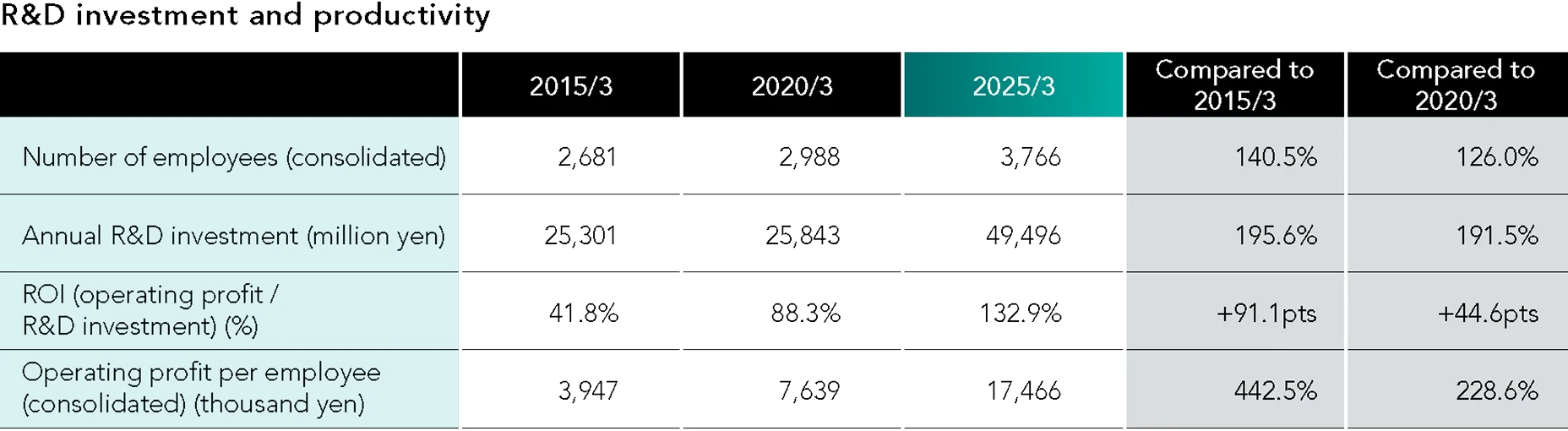
In recent years, our investment in development has increased with each passing year, growing 1.9 times over the past decade. These investments are expected to exceed 50.0 billion yen in our fiscal 2025 plan. Although our development team is working tirelessly to improve the efficiency and productivity of title development, we still believe that higher investment inputs for development of titles is inevitable given the need to increase user satisfaction and respond to the increasing technical capabilities of gaming devices.
In addition to managing development based on the conventional 60-month map, we are strengthening our investment management by creating a medium-to long-term lineup that includes additional content and checking its progress. When starting production of a title, we consider the scale of development by referencing past sales data, and the process involves application and then approval. Within this, we use the medium- to long-term lineup and title-specific ROI and ROIC management as primary benchmarks. In turn, we formulate sales plans in conjunction with the scale of investment.
We recognize that this investment management is not just about control, but is also an essential initiative for expanding our lineup to support sustainable growth. Even as we increase our investment in development, operating profit per employee has steadily risen, and we view our continued growth as a company as one of our achievements.
Addressing the need for more office space for development teams
Based on our human resources investment strategy, the pace at which the Group’s headcount is rising has continued to increase by about 150 every year, reaching a level 1.4 times that of 10 years ago, and 1.2 times that of 5 years ago. Of particular note, we have increased the number of our developers from 2,460 people in the fiscal year ended March 2023, to 2,846 people in the fiscal year ended March 2025, an increase of 386 people (approximately 15%) over the past three years. We are thus faced with the issue of our current office space nearing capacity and are quickly working to address this.
 New building adjacent to headquarters under construction (scheduled for completion in 2027)
We are currently constructing a new building north of our Head Office, which is an example of how we are steadily improving our work environment in anticipation of a medium- to long-term increase in personnel. We aim to secure space that can accommodate the expansion of our development team over the next 10 years and investment in business assets will continue to be one of our most important line items.
M&A opportunities
We are also investing in M&A to ensure that we consistently provide new title content, expecting that these deals will strengthen our development capabilities.
We have acquired two development-related companies since fiscal 2023 (making them subsidiaries) in an effort to expand our development system. Since time is required to train creators, we are stepping up mid-career recruitment and at the same time, actively considering M&A deals that will provide personnel who can produce immediate results.
Furthermore, in order to respond to the diversification of user play styles and technological advances, we believe that the introduction of new technologies, including Al, is essential to strengthening our development capabilities going forward. We will continue to investigate this as an initiative that may help to improve development efficiency as well as the expressiveness of our content.
Initiatives for market expansion:
utilizing movies and other content
In order to continue sustainable growth, we need to penetrate our brand throughout the world and expand our user base. As part of this, we are actively promoting investment in licensing and film productions that utilize our IP. In the area of film, especially, we expect that the scale of investment will expand in the future. By actively participating in the movie planning and production stages, Capcom’s development team aims to further enhance our brand value.
We are already seeing results from the synergies between anime productions and game sales, creating a virtuous cycle that both increases awareness of IP and promotes sales. As a result, the scale of our marketing activities is growing, and we are making progress in creating opportunities for users to come into contact with our IP through a variety of channels.
Furthermore, appropriate marketing that takes into account the characteristics of each country and region is essential to brand penetration. Therefore, we continue to invest in strengthening our human resources and organizational structure, as well as in building systems and networks to better understand user trends.
Returning profits to shareholders
Based on our basic policy on shareholder returns, we strive to provide regular dividend payouts. We will also maintain watch over our stock price trends and how the market understands our management strategies, and flexibly buyback shares according to the situation.
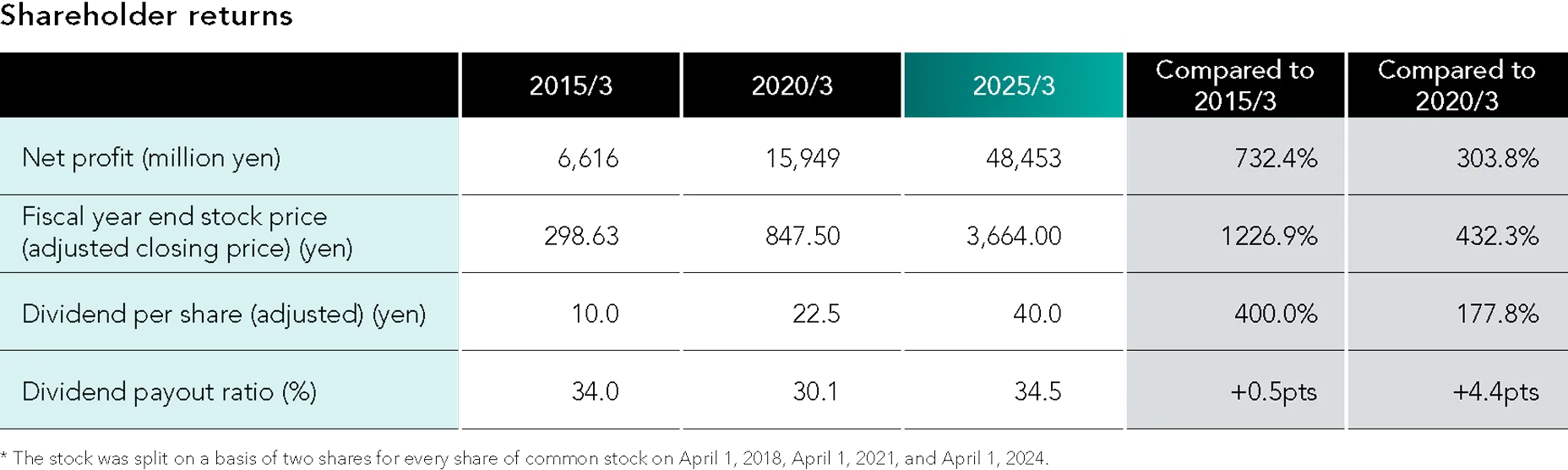
Regarding dividends for the fiscal year ending March 31, 2026, we plan to pay an annual dividend of 40 yen (dividend payout ratio of 32.8%) to return profits to shareholders.
Our stock price has grown steadily in proportion to the increase in net profit over time, resulting in steady progress in the enhancement of corporate value.
Looking ahead, we will continue to strive to meet and exceed the expectations of our shareholders and investors while maintaining a dialogue with them.
In closing
As I have stated, we believe that it is “people” who support the game business, and that human capital is the driving force behind our growth. By advancing this human resources strategy in conjunction with our financial strategy, we will be able to directly maximize our corporate value. In this way, by continuing to invest in human capital and strengthening the financial base that supports it, the Group will seek out the sustainable enhancement of corporate value over the next decade.
Medium- to Long-Term Growth Strategy
- The COO’s Discussion of Growth Strategies
- Market Analysis
- CHO & CFO discussion on Capcom’s HR and financial strategies
- Financial Highlights