Stock Quote
Business Performance (Japan GAAP)
Here we breakdown our consolidated business results for the three months ended June 30, 2026 with graphs and diagrams.
1. Operating results overview
Scroll horizontally to view

| Net sales | Operating profit | Ordinary profit | Profit attributable to owners of the parent |
Basic earnings per share |
|---|---|---|---|---|
| 70,410 million yen (up 54.7% YoY) |
41,054 million yen (up 66.9% YoY ) |
41,452 million yen (up 81.1% YoY ) |
29,159 million yen (up 69.2% YoY ) |
69.71 yen |
-
Net sales (cumulative)
Plan
-
Operating profit (cumulative)
Plan
-
Ordinary profit (cumulative)
Plan
-
Profit attributable
to owners of the parent (cumulative)Plan
In the three months ended June 30, 2026, Capcom Co., Ltd. (the "Company") pursued investments for growth aimed at the ongoing enhancement of digital sales to further advance and expand within the global market. In addition, the Company actively promoted growth investments by strengthening its development capabilities with the aim of ensuring stable and sustainable growth; this included enhancing its development infrastructure as well as carrying out research and development of cutting-edge technologies, such as AI and its proprietary game development engine. Furthermore, as part of its human resources investment strategy, which is one of the Company’s top priorities, the Company continued its efforts to secure and foster human resources to support the future while refining the workplace environment so that employees can perform to the best of their abilities, and worked to enhance corporate value over the medium to long term.
Regarding business performance, the Company worked to increase global unit sales in its core Digital Contents business through the release of all-new IP PRAGMATA and by strengthening sales of catalog titles, primarily its flagship series. As a result, in the three months ended June 30, 2026, the Digital Contents business contributed to earnings with sales of 256 titles in 236 countries and regions and total unit sales of 23.81 million units, up from 14.16 million units sold in the same period of the previous fiscal year.
The Company also aimed to enhance the value of its brands by coordinating the activities of its eSports, Media, and Character Licensing businesses with the content of its major intellectual properties (IPs). Further, to increase earnings the Company continued to pursue sound store operations while opening locations in new formats in Arcade Operations, while in Amusement Equipments it continued to release smart pachislo machines and utilize its popular IPs.
As a result, for the three months ended June 30, 2026, consolidated net sales were 70,410 million yen (up 54.7% year on year), operating profit was 41,054 million yen (up 66.9% year on year), ordinary profit was 41,452 million yen (up 81.1% year on year), and profit attributable to owners of the parent was 29,159 million yen (up 69.2% year on year).
Status of business by operating segment

1. Digital Contents business
-
Net sales (cumulative)
Plan
-
Operating profit (cumulative)
Plan
-
Operating margins (cumulative)
Plan
In the Digital Contents business, the Company released all-new IP PRAGMATA (for PlayStation 5, Xbox Series X|S, PC, and Nintendo Switch 2) in April, representing a new type of science-fiction action-adventure game. The Company built a fanbase for the game through robust promotional activities and other measures, leading to a favorable performance of over 2.5 million units sold worldwide. In addition, the Company released Devil May Cry 5 Devil Hunter Edition for Nintendo Switch 2 in June, further expanding multi-platform support for its major Devil May Cry series.
Regarding catalog titles, Resident Evil Requiem, a title from the flagship Resident Evil series that was released in February of the previous fiscal year, continued garnering popularity from a wide range of global users, and due to active pricing measures cumulative sales of the game surpassed 8 million units. Additionally, ongoing sales growth for titles in the same series supported earnings, led by Resident Evil 4 and Resident Evil 2. Unit sales of past titles in the Monster Hunter series also increased after the Company announced a 2027 release window for Monster Hunter Wilds: Ascendance, a massive expansion for Monster Hunter Wilds, which is a major title in the same flagship series that was released in 2025. Furthermore, cumulative unit sales of Devil May Cry 5, which was released in 2019, surpassed 14 million units. This was supported by the game’s rollout to new hardware as well as pricing strategies carried out together with the launch of animated content for the series and efforts to enhance brand value through enhancing awareness of the IP. Regarding Street Fighter 6, the Company continued efforts to bolster coordination between its games and esports activities in pursuit of wider brand recognition and an expanded user base. Due to these efforts, unit sales of catalog titles altogether reached 21.26 million units, exceeding the 13.36 million units recorded in the same period of the previous fiscal year, contributing to earnings.
As a result, the segment earned net sales of 54,648 million yen (up 83.0% year on year) and operating profit of 37,597 million yen (up 87.5% year on year).
2. Arcade Operations business
-
Net sales (cumulative)
Plan
-
Operating profit (cumulative)
Plan
-
Operating margins (cumulative)
Plan
In Arcade Operations, amidst changing consumer habits, disciplined operations of existing stores alongside store openings in new formats contributed to earnings expansion. Moreover, the Company held live events and other activities to maximize the appeal of its physical locations and create synergies with its other businesses.
During the three months ended June 30, 2026, the Company opened Chara Cap/Capsule Lab Hanyu (Saitama Prefecture) in April, a character merchandise and capsule toy specialty store, bringing the total number of stores to 62.
In addition, the Company continued taking various measures aimed at enhancing the in-store experience at existing stores, including Capcom Store Taipei (Taiwan), its first directly operated store outside Japan, and CAPCOMIX Abeno Hoop store (Osaka Prefecture), which features Capcom character-themed attractions, both of which opened in March of the previous fiscal year.
As a result, the segment earned net sales of 6,762 million yen (up 20.6% year on year) and operating profit of 899 million yen (down 4.4% year on year).
3. Amusement Equipments business
-
Net sales (cumulative)
Plan
-
Operating profit (cumulative)
Plan
-
Operating margins (cumulative)
Plan
Regarding the Amusement Equipments business, the pachislo market has been characterized by stable demand due to the ongoing spread of smart pachislo machines. In May, the Company released Biohazard RE:3, a new smart pachislo model that leverages the Company’s major Resident Evil series IP. This model sold 17 thousand units, contributing to revenue.
As a result, the segment earned net sales of 7,097 million yen (down 9.1% year on year) and operating profit of 4,045 million yen (down 17.6% year on year).
4. Other Businesses
-
Net sales (cumulative)
Plan
-
Operating profit (cumulative)
Plan
-
Operating margins (cumulative)
Plan
In the Media business, as part of its Single Content Multiple Usage strategy, which promotes the multifaceted development of the Company’s popular content (IP), the Company strove to expand recognition of its major IP through film and television adaptations. This included Season 2 of the Netflix animated series Devil May Cry, which began streaming worldwide in May and has been met with acclaim following the success of Season 1, which began streaming in 2025. Other efforts focused on building excitement for the live-action Street Fighter movie, which is scheduled for worldwide release in October 2026.
In the eSports business, the Capcom Pro Tour 2026 international tournament began in May and features Street Fighter 6, the latest title in the same series. Through such activities, the Company worked to further promote esports and expand the user base on a global scale.
In the Character License business, the Company focused on merchandise for its popular titles and on various event initiatives.
As a result, the segment earned net sales of 1,902 million yen (down 14.6% year on year) and operating profit of 1,266 million yen (down 7.5% year on year).
2. Financial position overview for the period under review
Assets
Total assets as of the end of the first quarter increased by 2,004 million yen from the end of the previous fiscal year to 341,312 million yen. The primary increases were 13,206 million yen in cash and deposits, 1,881 million yen in work-in-progress for game software, 1,182 million yen in buildings and structures, net, 964 million yen in property, plant and equipment, other, net, due to an increase of land assets, etc., and 708 million yen in current assets, other due to an increase of prepaid expenses etc. The primary decrease was 15,774 million yen in accounts receivable – trade.
Liabilities
Total liabilities as of the end of the first quarter decreased by 17,203 million yen from the end of the previous fiscal year to 54,387 million yen. The primary decreases were 8,467 million yen in deferred revenue, 5,545 million yen in provision for bonuses, and 3,094 million yen in income taxes payable.
Net assets
Net assets as of the end of the first quarter increased by 19,208 million yen from the end of the previous fiscal year to 286,924 million yen. The primary increases were 29,159 million yen in quarterly profit attributable to owners of parent, and 785 million yen in foreign currency translation adjustment. The primary decrease was 10,655 million yen in dividends from retained earnings.
3. Forecast and Outlook
The forecast for the consolidated business results for the current fiscal year ending March 31, 2027, remains the same as what was projected at the financial results announcement on May 13, 2026.
Earnings forecast for the fiscal year ending March 31, 2027 (From April 1, 2026 to March 31, 2027)
Scroll horizontally to view
| Net sales | Operating profit | Ordinary profit | Profit attributable to owners of the parent |
Earnings per share | |
|---|---|---|---|---|---|
| Year ending March 31, 2027 | 210,000 million yen (up 7.5% YoY ) |
83,000 million yen (up 10.2% YoY ) |
83,000 million yen (up 12.0% YoY ) |
58,000 million yen (up 6.3% YoY ) |
138.65 yen |
-
Note: The Company discloses a full year business forecast, as it manages its business performance on an annual basis.
Outlook
Regarding the outlook going forward, while the market for the Company’s core Digital Contents business is expected to grow steadily, driven by an increase in game content and the expansion of the global gaming user base, the business environment is undergoing significant changes: the increasing number of distribution channels for content, diversification of devices, and the progress of technological innovation, including the widespread adoption of generative AI.
In such an environment, the Company will continue to strive to reach its medium-term management goal of achieving 10% annual growth in operating profit and realize its medium- to long-term vision of being a company that captivates people around the world with its best-in-class immersive content. It will seek to further expand the global reach of its content by enhancing its brand and attracting new users.
In order to achieve the long-term milestone of 100 million units in annual sales in its core Digital Contents business, the Company will strengthen long-term pricing measures and global sales, working to enhance its sales network that extends into over 240 countries and regions while improving localized marketing and its understanding of user needs.
Moreover, the Company will strive to develop the Arcade Operations and Amusement Equipments businesses by using popular IPs and major content, as well as uncover latent users and maximize profit-earning opportunities by raising awareness of IPs through investment in and leveraging of film and television productions, licensed merchandise, and esports.
In addition to the above strategies, the Company will continue its efforts to achieve its management goals by promoting its human resources investment strategy, which will be the driving force for the Company’s sustainable growth. It will strengthen investments in the research and development of cutting-edge technologies, such as its proprietary development engine, and the enhancement of its development environment, with the aim of adapting to new technologies and growing its product pipeline through the creation of new IPs and utilization of major existing IPs.
Through various activities, the Company will continue to work toward realizing its management philosophy of being a creator of entertainment culture that stimulates the senses and excites people through game entertainment.
Please refer to the latest IR Materials in "Quarterly Reports."
-

Quarterly Reports (Japan GAAP)
-

Sales of All-New IP PRAGMATA Top Two Million Units in 16 Days!
– Unique gameplay, world, and storytelling earn high praise from players worldwide – -

Devil May Cry 5 Devil Hunter Edition to Launch on Nintendo Switch 2!
– Season 3 of Devil May Cry animated series on Netflix has also been announced – -
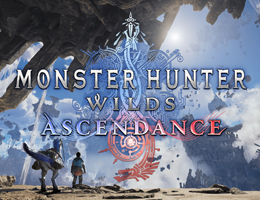
Monster Hunter Wilds: Ascendance to Launch in 2027!
– Monster Hunter: World, released in 2018, surpassed 30 million units as
Capcom looks to expand its global user base – -

Capcom to Open CAPCOMIX, a New Type of Attraction-Integrated
Amusement Facility This Spring!
– Offering an extensive lineup of attractions themed around Capcom’s popular characters –


-
-
October 27, 2026FY2026 2Q Financial Results Announcement
-
October 01, 2026-October 26, 2026Quiet Period
-
September 17, 2026-September 21, 2026Tokyo Game Show 2026
-
 Integrated Report
-
IR Materials Download
-
IR Social Accounts
-
Top 5 Recommended Pages
(as end of August 31, 2026)